
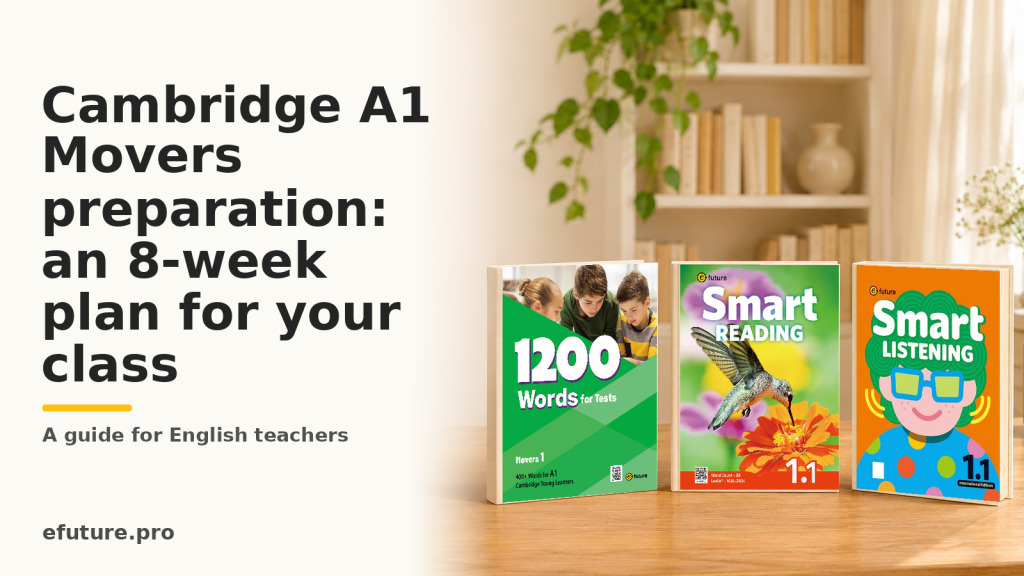

Some learners answer spoken questions quickly but struggle with spelling. Others read confidently yet need longer to respond in conversation. With a shared exam date, a good preparation plan makes those differences visible from the first week and gives you time to respond to them.
The model below is for a class already working close to A1 Movers. It uses eight weeks with two 45-minute meetings each week. A class at an earlier stage needs a longer pathway; this plan then works well as its final stage.
Choose the exact qualification and version
“Cambridge preparation” is too broad a goal for lesson planning. Record the qualification and establish whether learners will take a paper-based or digital version. Use the official preparation index to check the level, format and current resources.
This example refers to paper-based A1 Movers preparation, including sample papers, recordings and Speaking videos with examiner commentary. If learners take the digital version, plan separate practice with its on-screen tasks and instructions.
Separate language needs from task-format needs
Begin with short samples of listening, reading with writing, and conversation. Short tasks are enough to show what the class needs; the full format rehearsal comes in week 7. After each activity, distinguish language difficulty from uncertainty about instructions, spelling or task organisation.
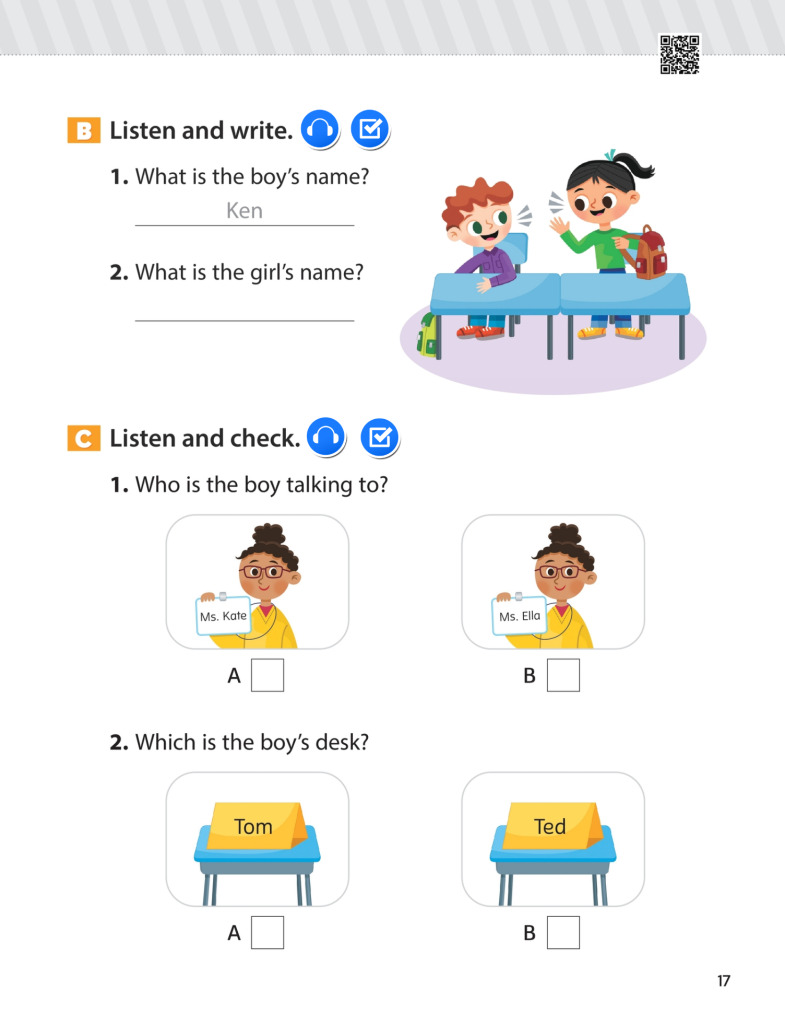
A learner may know an answer but not know where to write it. Another may select the right box using clues without understanding the recording. These cases need different support. Keep work samples: comparing similar tasks a few weeks later tells you more than a total score.
Count actual meetings before the intended date, allowing for your school’s breaks and likely absences. If the language gap is wider, extend the preparation period or choose the qualification one level down. Spend the extra time on language learning and plan the format rehearsal for week 7.
An eight-week model with a changing priority
Listening, speaking, reading and writing recur every week. A priority shows where the week’s extra attention goes; the other skills continue in shorter tasks.
| Week | Priority | Classroom work and evidence |
|---|---|---|
| 1 | Identify needs | Use short samples from the three exam parts. Record language needs separately from unfamiliar instructions. Ask learners where they want support. |
| 2 | Vocabulary in context | Use a suitable 1200 Words for Tests story, listening, written practice and a personal question. Revisit the words in the second meeting without the list. |
| 3 | Listening for information | Work from the main idea to a detail in a short recording. Learners explain an answer. Introduce the relevant Movers task format separately. |
| 4 | Reading and writing | Read an accessible text, discuss meaning and write an independent answer in the required form. Distinguish understanding from accuracy of spelling. |
| 5 | Speaking | Practise description, differences and storytelling appropriate to the chosen exam. Include asking for repetition and changing roles so everyone speaks. |
| 6 | Revisit gaps | Use brief stations for spelling, listening detail or instructions, based on earlier observations. End with a shared communication task. |
| 7 | Rehearse the format | Use appropriate official sample papers and Speaking resources. Rehearse working conditions, then discuss difficult points and useful strategies calmly. |
| 8 | Review and decide | Compare work samples and speak with the learner and family. Agree further learning and confirm or postpone the date. Base the decision on work samples from all eight weeks. |
A possible 45-minute meeting
One workable division is five minutes of retrieval, ten minutes with a short text or recording, fifteen minutes on the main task, ten minutes of pair discussion and five minutes for an independent exit response. Change the balance when the class needs a different pace.
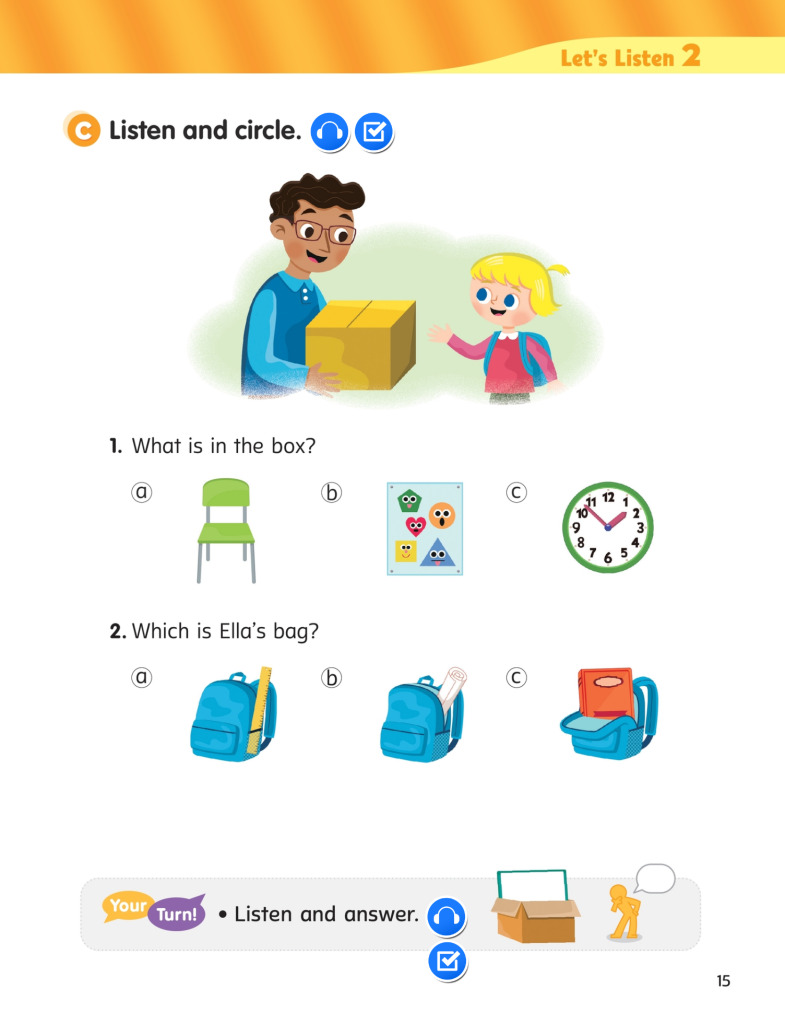
During a listening-focused week, learners first establish the main idea, then listen for a detail and explain their choice to a partner. For the exit response, they write one sentence containing information from the recording. A listening priority can therefore include meaningful writing and speaking.
Between lessons, a manageable task might be to hear a familiar passage again and prepare one response. Prepare a paper version for learners without a device at home, and design the task so that learners can complete it independently, without help in English from the family.
What to watch: Joseph, the teacher, works through Unit 1 of 1200 Words for Tests Movers 2 (family) with the same rhythm as week 2 of the plan. From 1:30 the first listening to the new words is for listening only and the second for repetition. From 2:30 to 4:10 the harder words get gestures, a form of TPR (linking a word with movement): jet is outstretched arms and parents is two hearts made with the hands. From 7:40 to 10:50 comes a story about an air show: a first listening with gist questions, a second for filling gaps from a word bank, then reading in pairs and peer checking. From 12:50 the task is a personal family tree, and from 15:50 sentences about it on the model “These are my parents”. From 21:05 the teacher sets word revision for homework and explains that it will be checked at the start of the next lesson with a short listening and speaking task.
Vary support, not participation
For the same topic, one pair might use a word bank, another a sentence opening and another an extension requiring an original explanation. Give everyone preparation time before asking for whole-class answers. Faster learners can justify a choice or create another question rather than complete another page of the same test.
In a multilingual class, check that difficulty with the task is not simply uncertainty about a new instruction. After several meetings, see whether support can be reduced. An independent response with the model put away is different evidence from a correct answer completed with prompts.
Choose a resource for a need, not a cover number
1200 Words for Tests has separate Starters, Movers and Flyers levels for vocabulary in context. For this near-A1 plan, go straight to the Movers level.
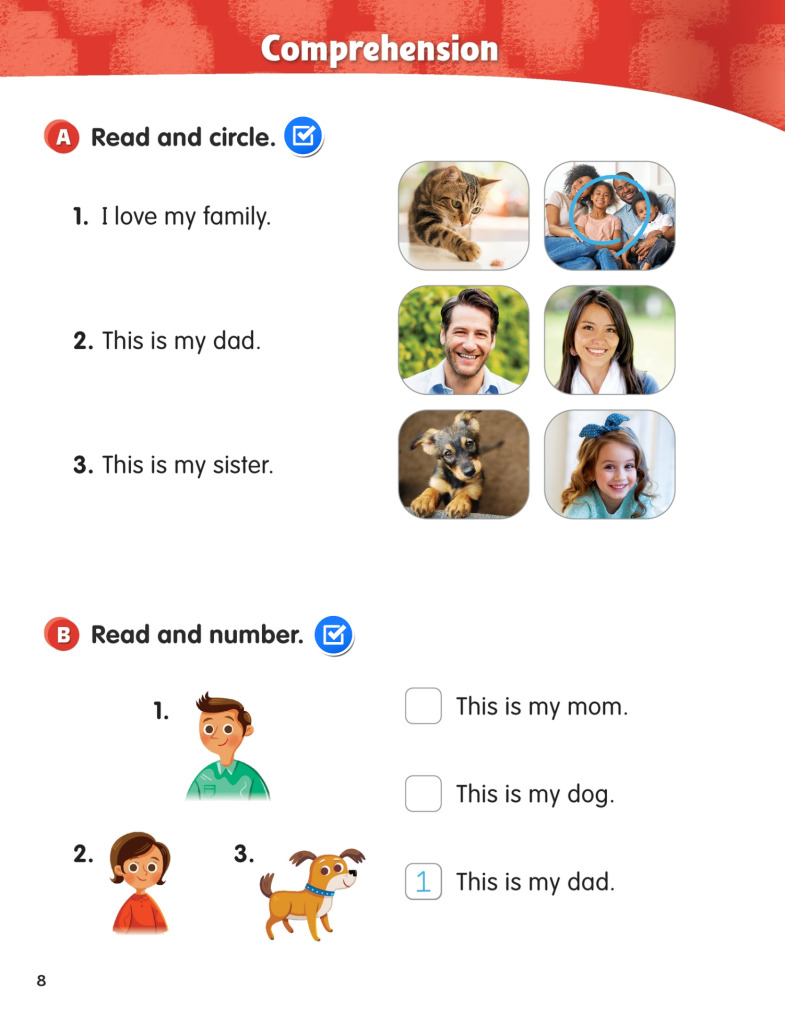
Smart Listening develops listening and Smart Reading develops text comprehension; you choose the volume that matches the learner’s need. Smart Listening 1.1, International Edition, ISBN 9791192361536, and Smart Reading 1.1 are Pre A1. In a Movers class they work well as a short top-up for a learner who misses basic vocabulary in a recording or a text. After a few such sessions, the learner returns to A1 tasks with the rest of the class.
What to watch: This Smart Listening 1.1 lesson on school things shows a short Pre A1 listening cycle. From 1:30 the recording presents six words for repetition, and from 1:54 they are practised with picture flashcards in the sentence “This is a book”. From 3:20 comes a listen-and-number task and from 5:08 a listen-and-tick task. From 6:15 learners work in pairs with flashcards they have made: one asks “What is it?”, the other answers, and the first holds up the matching card. A few short tasks like these make a useful top-up for a learner in a Movers class who misses basic vocabulary in recordings.
eFuture resources build language at the relevant CEFR level; add format practice from current Cambridge materials. The British Council Poland guide from 2020, in Polish, offers useful ideas for organising the work; check current task formats on the Cambridge website.
Finish with information for learning
Prepare a concrete family update: what the learner does independently, what still needs support and what to work on next. Share progress with each family individually. If a learner needs more time, postponing the exam is a sound teaching decision and the plan extends by a few more weeks.
Start with one class. Enter its real meeting dates, the most important learning need and the first work sample you will collect. Then choose a suitable resource, such as the Movers level of 1200 Words for Tests or a Smart Listening volume. The plan then remains a teacher’s tool and takes the class towards the exam step by step.