
English Learning Books and Coursebooks - A1 Level (Elementary)
( number of products: 82 )Discover a wide selection of educational materials precisely mapped to the A1 CEFR level. Our catalog includes core coursebooks, dedicated grammar workbooks, engaging educational comics, and resources that prepare students for their first international exams (such as Cambridge YLE Movers). Build solid foundations for fluent communication with e-future.

1200 Words for Tests Movers 1

1200 Words for Tests Movers 2

1200 Words for Tests Movers 3
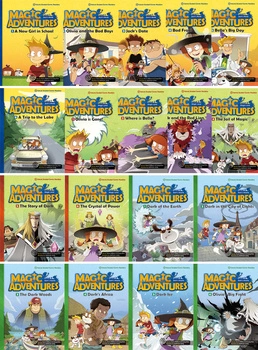
18 comics for children Magic Adventures Level 1,2,3
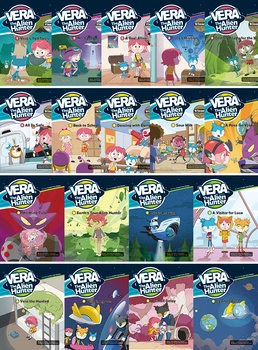
18 comics for children Vera The Alien Hunter Level 1,2,3


2in1 set - My First Grammar 2 Student Book + Worbook





A1 Level (Beginner) - The Foundations of Fluent Communication
In English Language Teaching (ELT) methodology, achieving a solid A1 level marks a breakthrough in a student's development. According to the Common European Framework of Reference for Languages (CEFR), the A1 level (often referred to as Beginner or Elementary) is the phase where learners stop relying solely on imitation and isolated vocabulary. Instead, they begin consciously constructing simple sentences to satisfy concrete communicative needs. This proficiency is often targeted in the middle primary years, providing the crucial bedrock upon which all future language acquisition is built.
At e-future, we understand that this is exactly the stage where a student is most easily discouraged by overly dense material or excessively complex grammar explanations. That is why our A1 coursebooks are meticulously designed to build self-confidence step by step. Through clear situational contexts, humor, and captivating narrative reading materials, we ensure that learning is no longer just repetition—it represents the first true steps towards genuine, two-way conversation.
Language Competencies: What Can an A1 Learner Do?
Children and young teens working with A1 materials transition from purely receptive skills to increasingly confident language production. The educational objectives at this stage, which align closely with the requirements of the Cambridge YLE Movers exam, include the following areas:
- Speaking Production: The learner can fluently introduce themselves and others, ask basic questions about where people live, what they own, and who they know, and answer similar questions. They can interact in a simple way provided the other person talks slowly and clearly.
- Grammar in Use: Understanding and confidently using the Present Simple tense, the verb "to be", and basic pronouns. This stage also gently introduces the Present Continuous (for actions happening right now) and the Past Simple tense for the most common irregular verbs.
- Vocabulary Expansion: A significant broadening of the lexical base. The student handles vocabulary related to clothes, food, rooms in a house, professions, and the terms necessary to describe daily routines and hobbies.
- Reading Comprehension: The transition to reading cohesive texts, short stories, and early English comic books. The learner can extract the main idea from a short, multi-sentence paragraph.
A1 English Books from the e-future Catalog
Achieving such comprehensive competencies requires methodological flexibility. e-future's offering for the A1 level is a rich ecosystem of materials that can be combined (blended learning) to suit the needs of any class. In our portfolio, you will find:
1. Flagship Core Coursebooks
Instead of searching for disjointed online resources, rely on our proven, comprehensive series designed for primary school classrooms:
- Hand in Hand (Books 3 and 4): A course that places a massive emphasis on communication and experiential learning.
- Let's Smile (Books 4 and 5): An ideal solution for engaging students through cheerful stories and collaborative group projects.
- Smart English (Books 4 and 5): A curriculum focused on building confidence and systematically developing all four language skills.
2. Grammar and Exam Preparation
For students needing structured knowledge consolidation, we offer the My First Grammar (2-in-1 sets: Student Book + Workbook) series, which visualizes the rules children struggle with most in a brilliant, accessible manner. Additionally, to rigorously prepare students for their first certificates, we highly recommend the 1200 Words for Tests Movers (books 1-3) series, which effectively solidifies the necessary lexical base in a format similar to the Cambridge YLE tests.
3. Graded Readers and Educational Comics
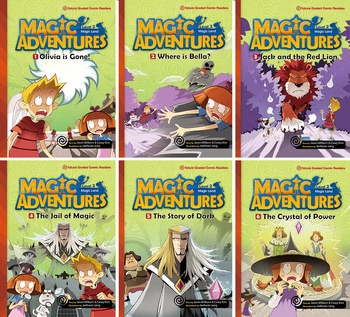
Many educators constantly search for high-quality reading materials for level 1 readers. e-future's response is a suite of authentic reading materials that ignite the imaginations of A1 students. We offer a full library of immersive educational comics, including the Vera the Alien Hunter (Levels 1, 2, and 3) and Magic Adventures (Levels 1, 2, and 3) series. Available as single issues or in sets of 6 and 18, they serve as perfect reading warm-ups. For older A1 students, we recommend the e-future DISCOVERY (1, 2, and 3) and Smart Reading (1, 2, and 3) series, which introduce fascinating non-fiction texts (science, nature, and the world). The process of fluent reading will also be cemented by the higher levels of our best-selling phonics series: EFL Phonics, Smart Phonics, and Speed Phonics.
How to Teach English at the A1 Level? Methodological Tips
Working with an A1 group requires the educator to balance play-based learning with the introduction of the first rigors of accurate language production. Teachers should slowly transition from the TPR method to task-based learning. Encourage students to tell short stories about themselves using the "scaffolding" technique—providing them with sentence templates they can fill with their own vocabulary. Utilize the comics from the Magic Adventures series for role-plays; children are much more willing to speak when they can assume the persona of a fictional character. Furthermore, never neglect the continuous development of listening skills; utilize materials like Smart Listening (1 and 2), which accustom A1 students to the natural speaking pace of native speakers.
Frequently Asked Questions (FAQ) - A1 Level
At what age or grade does a student typically reach the A1 level?
In standard, state-run educational systems across Europe, it is generally assumed that a student achieves full A1 proficiency by the end of the 3rd or during the 4th grade of primary school (assuming regular language exposure). In private and language schools, this level is often reached much earlier. However, what matters more than chronological age is the systematic mastery of the material and a demonstrated fluency in using present and simple past tense structures.
How do A1 graded readers differ from Pre A1 reading materials?
At the Pre A1 level, reading books rely almost entirely on phonics decoding of single words and very short, disconnected sentences. A1 English reading books (such as our Vera the Alien Hunter comics) feature a developed plotline. The student must follow a cause-and-effect sequence, understand the relationships between characters, and deal with the appearance of new vocabulary in context, rather than just in a glossary. This represents a massive step toward reading for the sheer pleasure of the story itself.
My students use standard national coursebooks at school. Will e-future materials complement their learning?
Absolutely. Standard national coursebooks must strictly adhere to the core curriculum. e-future's A1 materials cover the identical grammatical and lexical concepts; however, through the CLIL method, extensive comic book series, and specialized grammar books (like My First Grammar), they serve as an exceptional supplement to school knowledge. Our workbooks and graded readers are perfect for private tutoring and homeschooling as a powerful extension of mainstream education.