Free delivery from 16,00 €

Add products by adding codes

Add a CSV file
Enter the product codes that you want to add to the cart in bulk (after a comma, with a space or from a new line). Repeating the code many times will add this item as many times as it appears.

English Learning Books and Coursebooks - B1 Level (Intermediate)

( number of products: 6 )

Reaching the B1 level represents the gateway to truly independent communication. Discover e-future's extensive selection of Intermediate coursebooks and materials. Choose our innovative, fluency-driven series, captivating CLIL readers, and tools that perfectly prepare students for state exams and international certificates.

B1 Level (Intermediate) - Your Gateway to Independent Communication

Within the framework of the Common European Framework of Reference for Languages (CEFR), the B1 level—known in ELT methodology as Intermediate—is a true turning point. It is here that a student definitively departs from "survival English." At this stage, the learner becomes an independent user. They can express nuanced opinions, construct logical arguments, and effortlessly handle unpredictable situations while traveling. Their vocabulary is expansive enough to maintain a fluid, two-way conversation regarding abstract passions, current events, and future plans.

In many educational systems, reaching this proficiency is the ultimate goal for students concluding their primary or lower secondary education. At this juncture, educational materials can no longer be trivial; they must offer a genuine intellectual challenge and spark authentic cognitive curiosity.

What Does a Student Master at the Intermediate Level?

Books dedicated to the B1 level place a massive emphasis on structural flexibility, grammatical agility, and a rich repertoire of synonyms. These requirements align perfectly with the standards of international exams such as the Cambridge B1 Preliminary (PET). Students at this stage meticulously refine areas such as:

  • Complex Grammar in Use: The learner seamlessly transitions between present, past, and future tenses. Perfect constructs (e.g., distinguishing when to use the Present Perfect versus the Past Simple) become automated. They thoroughly explore Conditionals, the Passive Voice, and Reported Speech.
  • Written Production (Writing Skills): Writing at this stage goes far beyond short notes. Students are required to produce coherent, logically structured texts—essays, articles, and both formal and informal letters—utilizing a robust range of logical linkers (e.g., furthermore, moreover, nevertheless).
  • Reading Comprehension of Authentic Texts: The learner confidently analyzes longer journalistic articles, blog posts, and excerpts from non-fiction or literary texts. They can accurately extract the core meaning and specific details, even if they encounter unfamiliar vocabulary.

e-future Books and Materials for the B1 Level

At e-future, we actively steer clear of the "boring textbook" stereotype. We have developed a dynamic ecosystem of materials that activates the student and forces them to think critically outside the box.

1. Dynamic Core Coursebooks

For teenagers and young adults who require a modern perspective on language learning, we highly recommend the upper tiers of our flagship courses. A standout bestseller at this level is the highly communicative English Wave (Level 4) series. This exceptionally modern course prepares teenagers not only linguistically but also equips them with 21st Century Skills—critical thinking, collaboration, and complex problem-solving. Alongside the student book, we offer the fully integrated English Wave 4 Workbook, perfect for autonomous home study and revision.

2. CLIL Methodology and Advanced Reading

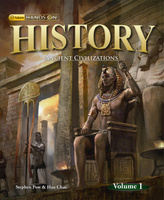
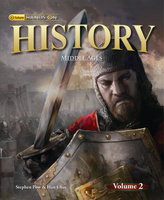
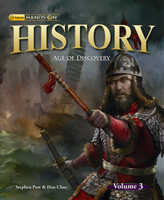
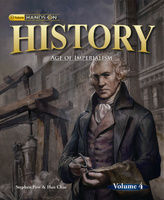
To successfully master the Intermediate level, students must engage with dense, informational texts. e-future's brilliant response is the spectacular Hands on History series. These are authentic, beautifully illustrated resources based entirely on learning world history through the medium of English. The series covers distinct eras: Ancient Civilizations, the Middle Ages, the Age of Discovery, and the Age of Imperialism. Utilizing these CLIL readers provides unparalleled analytical training prior to the demanding reading comprehension tasks found in any major language certification.

How to Teach at the B1 Level? Methodological Advice

Working with an Intermediate class means it is time to stop "holding the student's hand." The teacher should transition entirely into the role of a facilitator who organizes a safe space for open discussion. Drastically reduce Teacher Talking Time (TTT) in favor of Student Talking Time (STT).

Leverage texts from the Hands on History series to initiate project-based learning, where students research information independently and present their findings to the class. Emphasize "delayed correction"—correct errors only after the student has finished speaking so as not to interrupt their fluency. At this stage, the most crucial objective is making the student feel that their opinions expressed in English are just as valid and powerful as in their native tongue.

Frequently Asked Questions (FAQ) - B1 Level

How long does it take to fully master the B1 material?

The B1 level is famously known in ELT as an "intermediate plateau," meaning students tend to stay at this stage for a relatively long time. Solidifying advanced grammar and absorbing a vast new lexical base (especially abstract vocabulary related to history or science) takes the average learner approximately 200 hours of guided learning (e.g., classroom instruction combined with homework). The ultimate key to accelerating this process is assigning regular, extensive non-fiction reading outside of class hours.

Why is it so important to introduce history or science topics in an English class?

Using standard conversational topics (like hobbies or holidays) limits the student's vocabulary growth. By implementing the CLIL (Content and Language Integrated Learning) methodology through series like Hands on History, students are forced to acquire sophisticated, academic vocabulary and complex sentence structures. This not only prepares them brilliantly for reading comprehension tests but also equips them to function comfortably in a foreign academic or professional environment.

My students speak quite well, but they cannot write coherent essays. How do I fix this?

At the Intermediate level, simply "communicating" is no longer enough—accuracy and structure are paramount. Students often write exactly the way they speak, neglecting formal text structure. To correct this, assign written summaries or analytical reviews (e.g., based on historical excerpts from the Hands on History series). Explicitly teach them how to use logical linkers and demand clear introductions, body paragraphs, and conclusions. Writing in English is a rigorous skill that can only be trained through consistent, detailed feedback from an educator.

Real customers reviews
4.9 / 5.0 40 reviews
pixel