Free delivery from 16,00 €

Add products by adding codes

Add a CSV file
Enter the product codes that you want to add to the cart in bulk (after a comma, with a space or from a new line). Repeating the code many times will add this item as many times as it appears.

English Learning Books and Coursebooks - A2-B1 Level

( number of products: 5 )

The transition from Pre-Intermediate (A2) to a solid Intermediate (B1) level is one of the most critical leaps in language education. Discover our transitional A2-B1 materials, including the dynamic English Wave coursebooks, Discovery non-fiction reading resources, and advanced workbooks. Build your students' linguistic independence and confidence.

A2-B1 Level - The Crucial Bridge to Linguistic Independence

In English Language Teaching (ELT) methodology, the transitional phase between the A2 (Pre-Intermediate) and B1 (Intermediate) levels is universally recognized as the most sensitive stage in a student's educational pathway. This is precisely where a massive qualitative leap is required. The learner must abandon "safe," memorized communicative phrases and begin operating the language flexibly—expressing abstract thoughts, giving opinions, and handling unforeseen, spontaneous situations. In many European educational frameworks, bridging the gap between A2 and B1 is the primary goal for upper primary students and teenagers entering secondary education.

The "Intermediate Plateau" - How e-future Materials Help Overcome It

Teachers and educators frequently encounter the phenomenon known as the Intermediate Plateau. Students often feel that their progress has suddenly stalled; they know the basic tenses and can communicate in everyday scenarios, but they severely lack the vocabulary and structural agility to sustain a deeper, meaningful conversation. The solution to this problem is not to continuously drill the same grammar rules, but to change the pedagogical approach by introducing pre-intermediate to intermediate English books that prioritize authenticity and a vast diversity of contexts.

e-future has addressed this challenge with absolute precision. Our coursebooks at the transitional A2-B1 level compel the student to actively process information. We move away from artificial dialogues in favor of the CLIL (Content and Language Integrated Learning) methodology. Here, students explore fascinating subjects from science, history, and technology—where the English language simply serves as a natural, transparent tool for acquiring real-world knowledge.

What Language Competencies Are Developed at the A2-B1 Level?

A seamless transition from A2 to B1 requires mastering specific competencies that are rigorously tested in international assessments, such as the B1 Preliminary (PET) exam. By utilizing e-future’s transitional materials, students work intensively on the following areas:

  • Advanced Grammar in Use: Students learn the advanced juxtaposition of tenses (e.g., distinguishing between the Past Simple and the Present Perfect). The A2-B1 level is also the crucial time to master Conditionals, the Passive Voice, and Reported Speech.
  • Vocabulary & Collocations: The key to breaking the language barrier is learning chunks of language and collocations. Rich vocabulary related to feelings, the global environment, and culture is introduced alongside common phrasal verbs.
  • Speaking and Argumentation: At this level, a student can actively participate in discussions, recount events, summarize plots, and logically argue their viewpoints using a variety of linking words (e.g., although, however, therefore).

Key e-future Series for the A2-B1 Level

To ensure students have a soft landing at the B1 level and are highly motivated, we strongly recommend two flagship series from our catalog that are perfectly tailored for teenagers and young adults.

1. English Wave – The Modern Communicative Course

Maintaining high intrinsic motivation is essential for teenagers advancing to the Intermediate level. The English Wave series is the perfect solution. It is an incredibly dynamic, six-level course whose upper tiers fit flawlessly into the A2-B1 gap. English Wave steps away from childish themes, offering teenagers engaging texts, highly modern graphic design, and countless opportunities for authentic conversation. The focus here is on speaking fluency, the practical application of grammar, and the development of 21st Century Skills (critical thinking, collaboration).

2. e-future DISCOVERY – Reading to Explore the World

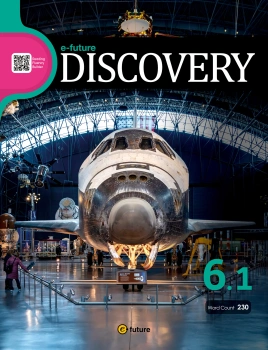
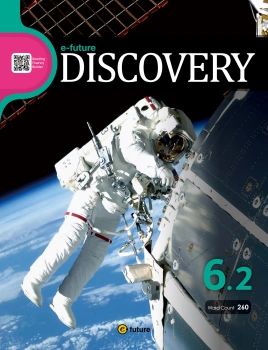
At the transitional stage, "extensive reading" plays a monumental role in language acquisition. For students bored by traditional, fictional readers, we created the outstanding e-future DISCOVERY series. These materials are heavily based on CLIL methodology, offering richly illustrated, captivating non-fiction texts. Students at the A2-B1 level read about outer space, ecology, historical inventions, and global cultures. Working with this series provides excellent analytical training prior to demanding reading comprehension tests—it expands passive vocabulary and teaches students how to extract meaning from an authentic context.


Frequently Asked Questions (FAQ) - A2-B1 Level

How long does it take to progress from an A2 to a full B1 level?

According to estimates by Cambridge Assessment English, a student requires an average of 150 to 200 hours of guided learning (classroom instruction combined with targeted self-study) to solidly achieve a B1 level. Utilizing transitional (A2-B1) materials allows for the intelligent distribution of this demanding process across two or three school semesters, effectively preventing the student from being overwhelmed.

Why is non-fiction reading necessary at this transitional stage?

While fictional stories are excellent for building foundational confidence, reaching the B1 level requires students to engage with informational, academic, and journalistic text formats. Using CLIL reading materials, such as the Discovery series, exposes learners to subject-specific vocabulary (e.g., science, geography) and complex sentence structures that are heavily tested in exams like the B1 Preliminary (PET).

My students score high on grammar tests but are afraid to speak. How can I help them?

This is a classic symptom of a language block caused by an overemphasis on accuracy at the expense of fluency. The solution is to introduce topic-based discussions. When a student reads about a fascinating natural phenomenon in the Discovery series, and the teacher asks for their personal opinion, the student forgets their fear of making a grammatical mistake because their primary focus shifts to conveying their thoughts. The English Wave series also provides perfect, structured pretexts for these spontaneous, low-pressure discussions.

Real customers reviews
4.9 / 5.0 40 reviews
pixel