

One child understands cat when they hear it but cannot read the word on the page. Another reads a whole sentence accurately without understanding what happened. A third follows a story with the teacher but quickly loses the thread when reading alone. They need different kinds of support.
When teaching children to read in English as a foreign language, look beyond the level printed on the book. Ask what is making reading difficult for this learner now. Oral language, letter–sound knowledge and comprehension develop alongside one another. Shared books can be part of learning from the beginning; independent reading needs a text matched to what the child can currently manage.
This guide helps EFL teachers and families move from a brief observation to a practical next step. It is a way to plan support, not a diagnostic assessment.
At a glance
- If the child knows a spoken word but cannot read it, look at letter–sound correspondences and blending.
- If they read the words but miss the meaning, explore vocabulary and sentence meaning through pictures, conversation or actions.
- If they understand with help but struggle alone, offer an easier text and gradually reduce support.
- Match the book to the purpose: a text for decoding practice may be different from a story an adult reads aloud.
- Return to a short passage after practice and notice what the child can do more independently. Enjoying stories belongs in every part of this work.
Contents
- A brief observation before choosing an activity
- The child knows the spoken word but cannot read it
- The child reads the words but misses the meaning
- The child understands with help but struggles alone
- Choosing a book without counting unfamiliar words
- Shared reading and audio
- Plenty of easy reading for enjoyment
- When a child does not want to read
- A shared plan for teachers and families
- Matching materials and libraries to a need
- Frequently asked questions
- Sources
A brief observation before choosing an activity
Choose a short passage from a book that might interest the child. Start with the illustration and find out whether they understand a few spoken words that matter to the story. Then invite them to read a sentence or a small section. Afterwards, ask them to point to the matching picture or explain what happened.
Notice the difference between being unable to read a word and not knowing what it means. Say a word the child could not read and see whether they can identify it in a picture. You can also read a sentence aloud and find out whether its meaning then becomes clear. These small changes help you choose support; one response cannot establish the cause of a difficulty.
| What you notice | What to explore | The adult's next step | What to revisit after practice |
|---|---|---|---|
| The child understands the spoken word but cannot read it | Whether they know the relevant letter–sound correspondences and can blend | Brief practice with familiar spelling patterns, followed by the word in a sentence | Can they read a similar word without guessing? |
| They read a sentence but cannot show its meaning | Whether they understand key words and how they fit together | A picture, action or short conversation, then a return to the sentence | Can they identify the event or explain the meaning? |
| They understand shared reading but need constant prompts when reading alone | Whether decoding demands or unfamiliar language are overloading them | An easier passage, taking turns and rereading | Can they read the selected passage with less help? |
These needs can overlap. A learner may know some of the vocabulary, need support with a new spelling pattern and misunderstand one sentence. Choose one clear focus for the moment rather than trying to correct everything at once.
The Cambridge English young learners test can give a broad indication of English language knowledge. It does not replace observing reading: a result alone will not tell you whether the next step should focus on decoding, vocabulary or independent reading.
The child knows the spoken word but cannot read it
The teacher says cat and the child immediately points to a cat. Faced with the printed word, however, the child guesses from the picture or gives a letter name instead of a speech sound. This is a useful moment to connect a familiar spoken word with its spelling.
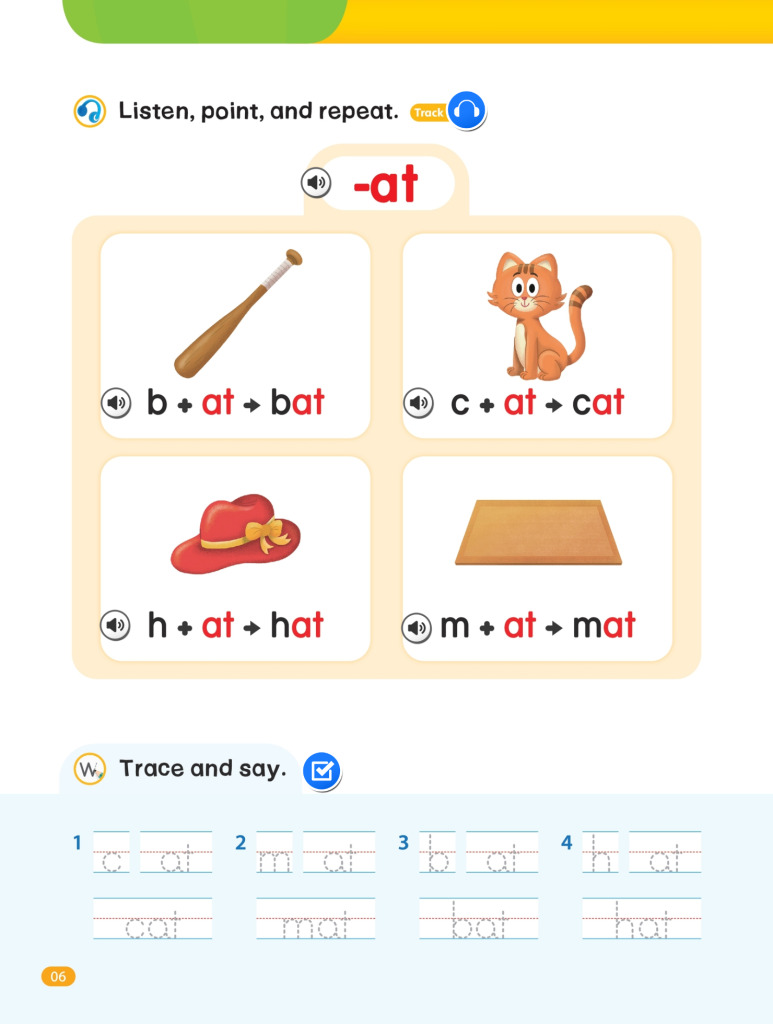
Phonics teaches correspondences between letters or groups of letters and speech sounds, and how to blend those sounds into words. In cat, the letters c, a and t represent three sounds; in ship, the two letters sh represent one sound. Blending uses speech sounds rather than letter names. Use the pronunciation model followed in your programme and recordings.
Learners who already read in another language bring useful experience, but its spelling conventions may differ from English. Polish, for example, generally has more regular spelling–sound relationships. An English learner familiar with Polish print needs opportunities to notice English patterns: the letter a does not sound the same in cat, cake and car. This does not mean learning every English word solely as a visual shape.
Choose a small set of familiar letter–sound correspondences and help the child blend a word. Then try changing the first sound: turn cat into hat if the relevant correspondences are already familiar. Rhyming, clapping the syllables in ba-na-na and identifying or changing individual sounds practise different aspects of phonological awareness. Kusiak-Pisowacka's article on bilingualism in early education, in Polish, describes examples of these activities.
Follow the systematic sequence of your chosen programme. The Hong Kong Education Bureau's phonics guidance recommends, among other things, consonants before vowels. That is a recommendation within this document, not the universal timetable for every phonics programme. Select work that lets learners start blending familiar sounds into words early and meet them in meaningful contexts.
With words such as the, said and was, draw attention to familiar parts of the spelling and explain the correspondence that needs particular attention. In said, for example, the child can recognise the initial s and final d, while the pronunciation of ai needs explanation. Then use the word in a sentence. High-frequency does not mean irregular; what the learner has already been taught also matters. The British Council / Spanish education ministry Literacy guidance describes attending to unusual spelling–sound correspondences in exception words.
For a fuller explanation, seven activities and an overview of four programmes, see Phonics: how children learn to read in English. The decision here is what to do next: after brief practice, return to a sentence and see whether the child uses the correspondence when reading.
The child reads the words but misses the meaning
A learner reads “The dog is under the bed” accurately, then points to a dog on top of the bed. More demanding phonics practice may not address the difficulty. Find out whether they understand under and the relationship expressed in the sentence.
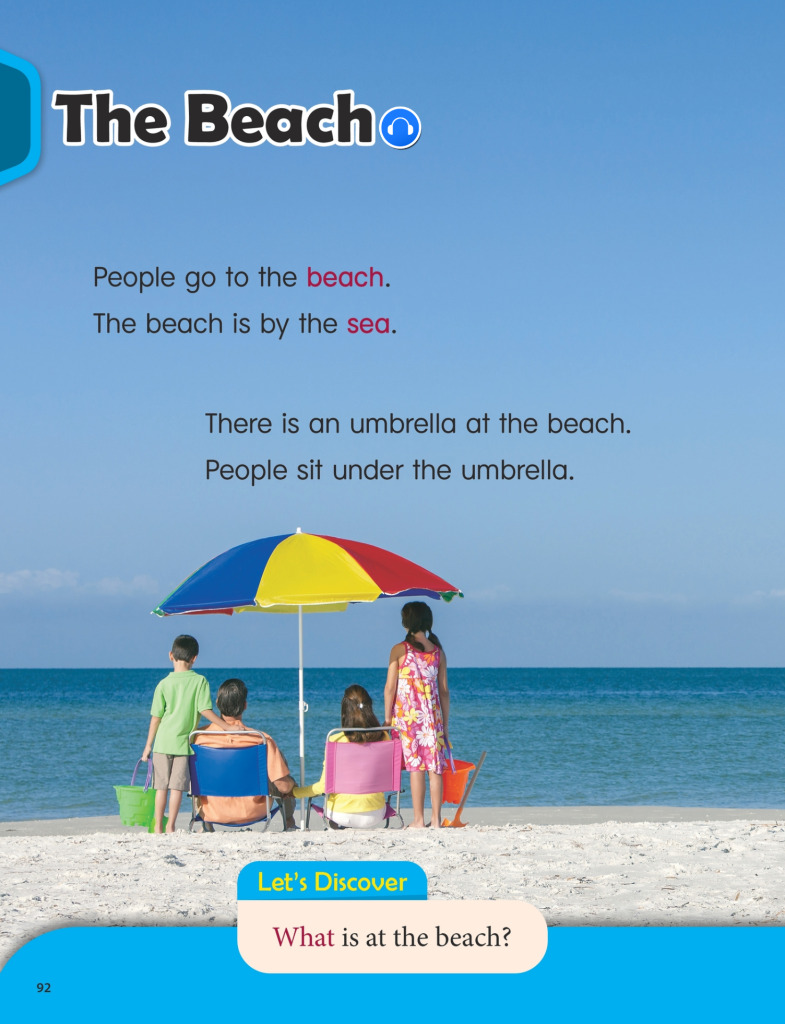
Put a toy under a chair, say a short sentence and invite the child to carry out a similar action. Then return to the book. You can also ask who did something or invite the child to match a sentence to a picture. Rather than translating the whole page, explain the word or structure needed to understand that part of the story.
If the purpose is to explore comprehension, the child can respond in their home language, point or use a gesture. Difficulty producing an English answer does not necessarily mean they have misunderstood. Offer a short English response separately when that fits the lesson objective.
The Polish Educational Research Institute's phonics guide, in Polish, highlights the need to develop vocabulary and comprehension alongside phonics. It also describes the statutory place of phonics in England and the widespread use of systematic synthetic phonics there. That is a description of an English educational context, not a ready-made timetable for every EFL class. In a foreign-language setting, check which spoken words your particular learners understand.
A conversation about a story can be brief and engaging:
- “Which picture shows what happened first?”
- “Why did the character hide the box?”
- “Show me the part that made you laugh.”
- “Draw what could happen next.”
Not every book needs an activity. When you want to explore comprehension, choose one response and then let the child return to the story. For more ideas, see 7 steps to learning English through active reading.
The child understands with help but struggles alone
During shared reading, the child follows the story and talks about the characters. Asked to read a page alone, they need help with almost every word. The shared experience is working, but the book may still be too demanding for independent reading.
Keep that story for reading together. For an independent attempt, choose an easier passage or a different short book on a topic the child enjoys. Start by taking turns: the adult reads the narration and the child reads a short exchange between characters. At the next session, offer a familiar section to reread.
Reduce help gradually. Point to a familiar group of letters rather than immediately supplying the whole word. Allow time for an attempt. If a difficulty stops the story, help calmly and continue. Notice whether the child needs fewer prompts while still understanding what they read.
A short note such as “reads the dialogue independently; needs help with words describing movement” is more useful than “weak reader”. It gives you something specific to plan for and a change to look for next time.
Choosing a book without counting unfamiliar words
Age or school year is not enough to choose a reading text. Consider language knowledge, the phonics already taught, interests and the purpose of reading.
A decodable text is selected to match the spelling–sound correspondences a learner has been taught. A graded reader controls language difficulty, such as vocabulary and sentence structures. These are different selection criteria: a linguistically simple story can still contain spelling patterns a beginning reader has not yet learnt.
For independent reading, try a short passage and ask:
- Can the child read most of it without constant help?
- Can they follow the main meaning?
- Do they want to know what happens next?
If decoding takes all their attention, choose something easier. If a few important words are the obstacle, explain them and try again. If the language is accessible but the subject is uninteresting, offer another story. Starting a book does not create an obligation to finish it.
For adult-led reading, you can choose a richer picture book and use gestures, illustrations and conversation to support meaning. British Council guidance on picture books describes sharing them from the beginning of language learning. Enjoying a story does not have to wait until the child can read every word alone.
For detailed guidance on selecting books and comparing materials, see Short English reading texts: choosing a text and checking understanding.
Shared reading and audio
A recording can provide a model of pronunciation and sentence rhythm, or help a child follow the story while looking at the text. Choose an approach that fits your aim: listen to a short section with the book open, talk about the scene, then invite the child to read a selected line. Favourite recordings can be enjoyed again.
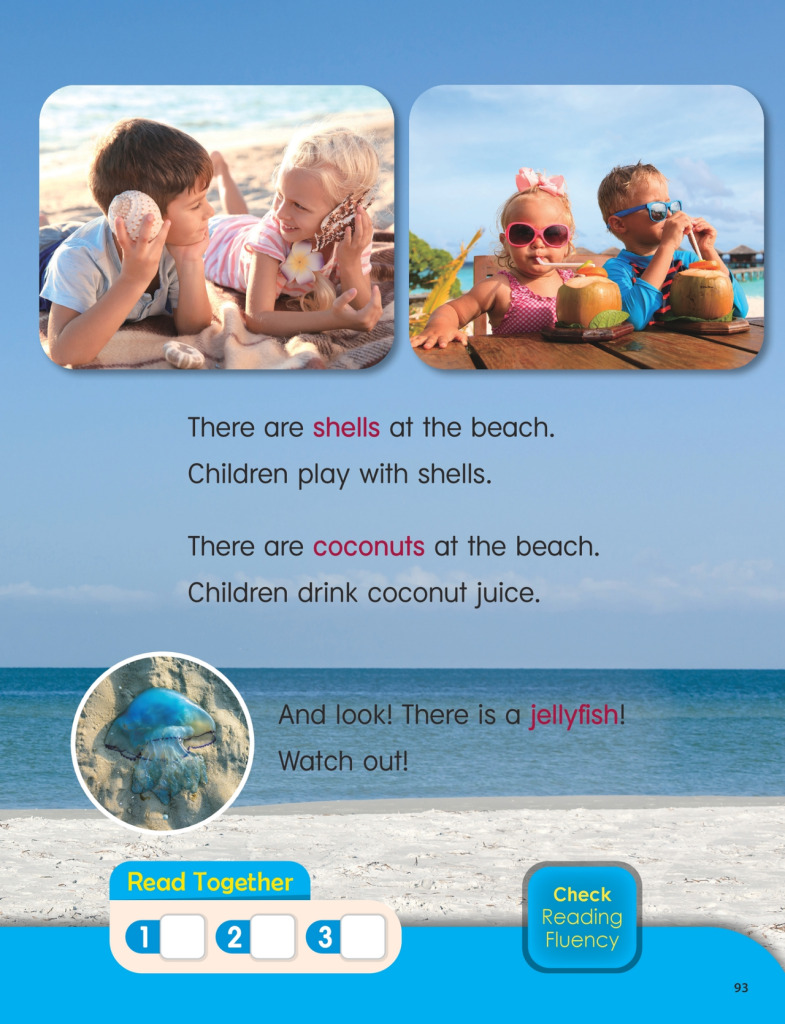
When you want to observe independent decoding, also offer a brief passage without audio. Repeating fluently after a recording and reading print independently are different tasks. Similarly, a song with written lyrics gives children contact with print but does not by itself show which words they can read.
In Bronson Hui's study summarised in ERIC, 46 learners of English at an American university worked in three conditions: reading-only, listening-only and reading while listening. The abstract reports better comprehension in the reading-while-listening conditions than in the listening-only conditions, but no main effects between reading while listening and reading-only. This does not establish whether audio is effective for children or show that one format is best for every learner. In practice, notice which task a recording helps your particular child complete.
Plenty of easy reading for enjoyment
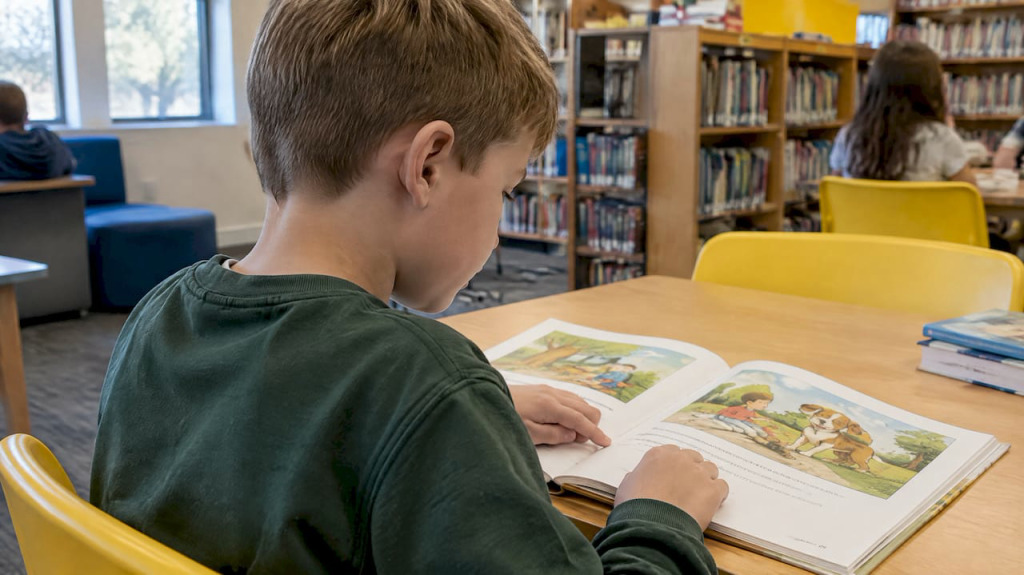
Close work on a sentence has a different purpose from reading freely. Extensive reading means reading plenty of accessible texts for enjoyment and general understanding. British Council TeachingEnglish emphasises learners choosing books and notes that reading need not always lead to discussion or classroom work.
A useful starting point is a text easier than one requiring intensive work during a lesson. The child should be able to follow the story rather than repeatedly reach for a dictionary. The amount of reading and the degree of independence can grow gradually alongside continuing work on language and phonics.
In a language school, provide a small choice of accessible texts and a calm period for reading. In a primary school, children might borrow books to take home and share a favourite passage later. At home, offer a choice of a few suitable books. A digital library can make different titles and levels easier to access.
A reading log should help children remember books, not turn reading into a race. Instead of requiring a quiz after every story, you might simply ask whether they would like another book from the same series.
When a child does not want to read
Before adding more exercises, change something about the reading experience. The text may be too hard, the subject may not appeal, or frequent corrections may have taken away the enjoyment.
Offer a choice: a comic, animals, space or a funny story. Gail Ellis's British Council guide to illustrated storybooks draws attention to children's imagination and interests. Let the learner look inside, read an opening aloud and decide which story to continue.
Suggest brief encounters with books at a time that suits the child's day. Match the length to concentration, tiredness and the support needed. Ending calmly is more useful than enforcing a number of minutes. Next time, notice something specific: “Today you read that dialogue without my prompt.”
If difficulties persist despite appropriate materials and support, talk to the child's teacher and the school staff responsible for learning support. Consider reading in the home language too, where the child is learning to read it. Agree on any further consultation with an appropriate local specialist. Support arrangements differ between countries and schools; the aim is to understand the learner's needs, not attach a label after one lesson.
A shared plan for teachers and families
After observing reading, agree on the focus and the help to provide. For example: “In class, we are blending familiar sounds into short words. At home, the child reads the marked dialogue and an adult reads the rest of the story.” This gives families a clear role without asking them to deliver a full phonics lesson.
Within a teaching team, agree how to record the correspondences taught and describe the difficulty of books. When a learner changes group or teacher, pass on specific information about what they can do independently and which prompts help.
After a few sessions, return to a similar task. Does decoding take less effort? Is the meaning clear? Is the child more willing to choose a book? Use those observations to select the next kind of support, rather than automatically moving to a harder book.
Matching materials and libraries to a need
Choose materials to meet an observed need rather than giving every learner the same route through a catalogue.
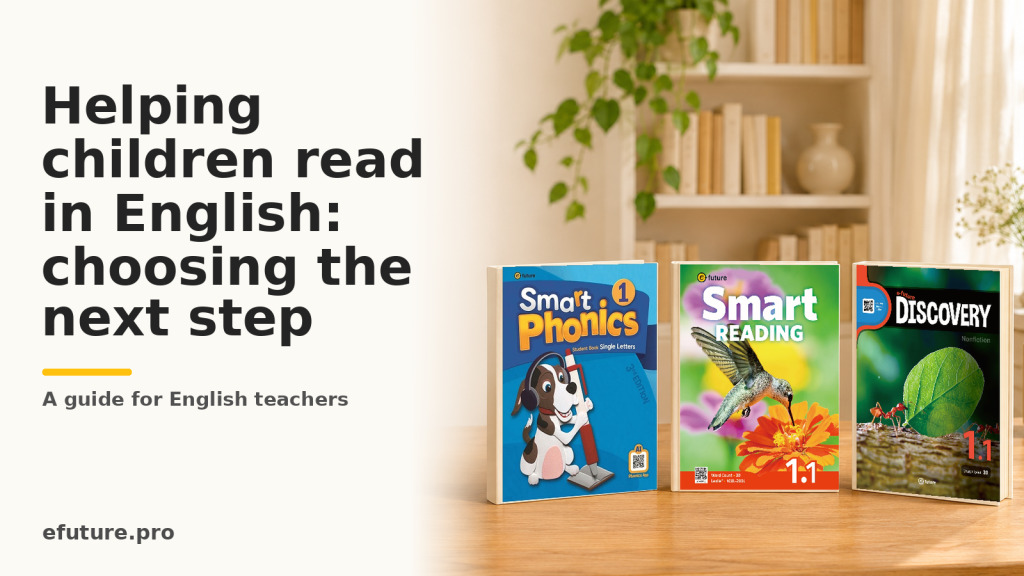
- Letter–sound knowledge and decoding: the publisher's four programmes — EFL Phonics, School Phonics, Smart Phonics and Speed Phonics — are discussed in the phonics guide. Keep to the coherent sequence of the programme you choose.
- Focused work on comprehension: Smart Reading offers material for reading work. Match the level and tasks to the learner's skills.
- Developing listening: Smart Listening focuses on that skill. It is not a compulsory stage before children can begin enjoying books.
- A wider choice of reading: e-future e-Library and MetaLibrary are options for access to readers. School group subscriptions require a minimum of 10 student accounts; the price is per student, with a teacher account included. Check the current library subscription options for available plans, periods and terms.
- Organising course work: eSmartClass is a learning management platform, not a library of readers. Information about practice and results can complement a teacher's observations; it does not replace a conversation about what a text means.
For your next lesson, choose one short passage and one need to explore. If you need a book for that attempt, use the guide to choosing reading texts and checking understanding.
Frequently asked questions
Must children read in their home language before starting in English?
Do not treat home-language reading as a compulsory entry requirement for English books. Shared stories, picture talk and sound games can be adapted to the child's current skills. When introducing print, take account of their experience in each language and show that letter–sound relationships may differ.
Must children finish phonics before reading their first books?
No. Adults can share picture books from the beginning of English learning. Alongside this, children can practise decoding with texts matched to the correspondences they have learnt. A book for shared reading and a passage for an independent attempt may have different levels of difficulty.
What if a child reads fluently but does not understand?
Explore key words and sentence meaning using a picture, gesture or conversation. Allow a home-language response if you are checking comprehension rather than English speaking. Explain what is needed and return to the passage; simply moving to a harder book will not address the difficulty.
How long should reading take?
Plan brief, regular contact with books, adapted to the child's concentration and independence. Time is not a performance standard. Sometimes a shared scene and one dialogue to reread are enough; at other times, the child may want to continue.
Does listening to a recording count as reading?
Listening, following print and independently decoding are different activities that can support one another. Use audio where it helps the task. To observe independent decoding, include a brief passage without audio prompts as well.
When should a child move to a harder book?
If they read an accessible passage comfortably, understand it and want to continue, offer another book and try it together. If they need constant help, keep the harder story for shared reading and provide an easier text for independent practice. A level label or school year cannot replace this check.
Sources
- Polish Educational Research Institute: Metoda foniczna, in Polish.
- Hong Kong Education Bureau: Teaching Phonics at Primary Level, 2017.
- Kusiak-Pisowacka: W kierunku dwujęzyczności w edukacji wczesnoszkolnej, 2017, in Polish.
- Ministerio de Educación / British Council: Orientaciones para el desarrollo del currículo integrado hispano-británico — Literacy, 2024.
- British Council LearnEnglish Kids: Learning English through picture books.
- British Council TeachingEnglish: Extensive reading.
- Gail Ellis, British Council: How to teach children English using illustrated storybooks.
- Bronson Hui, 2024: Scaffolding Comprehension with Reading While Listening and the Role of Reading Speed and Text Complexity — ERIC abstract EJ1414682.