
Webinars for teachers

Smart Teaching Academy by e-future
Webinars for teachers of English to children and teens
A free library of recorded webinars on teaching English to learners aged 3 to 14: reading, phonics, vocabulary, speaking, grammar, writing and assessment.
For more than 30 years, e-future has been creating English learning materials for children and teens and listening to the teachers who use them. These sessions show what works in real lessons and how to bring it into your own classroom.
Recording library for teachers
We have selected 23 webinar recordings from the e-future ELT YouTube channel and grouped them by area of classroom practice. The speakers are specialists in teaching English as a foreign language and e-future teaching consultants. Most sessions last about an hour.
Click a card to watch the recording on YouTube.
Reading and extensive reading
How to get students reading a lot, reading willingly and reading at the right level.
 58 minWhat extensive reading is and how it fits the curriculumRob Waring · Primary, all levelsWhy students should read plenty of easy text, how reading speed relates to comprehension and how to find the right starting level. Useful for planning regular reading across the school year.Watch on YouTube →
 64 minGetting the most out of your extensive reading classRob Waring · Primary, all levelsHow to set up and run a reading programme: choosing books, organising the class library, tracking progress and keeping students engaged. Works for a single class or a whole school.Watch on YouTube →
 62 minHow to motivate students to readRob Waring · PrimaryHow to spot students who struggle with reading or avoid it, how to choose books with the five-finger rule and how to set reading goals. Also covers paired reading, reading aloud and reading with movement.Watch on YouTube →
 58 minWhy reading matters: what research says about learning to readAndré Hedlund · Primary and teensWhat research on the reading brain says about reading in a foreign language, what graded readers add and how to build a reading culture in your school.Watch on YouTube →
 59 minStrategies and tips to build reading literacyGari Funiestas (e-future) · Ages 7–12The five pillars of reading: phonemic awareness, phonics, vocabulary, fluency and comprehension. The session ends with activities you can use straight away, including speed reading, reading with emotion and reading with movement (TPR).Watch on YouTube →
Phonics and early reading
From single sounds to reading words and sentences independently.
 86 minMaking phonics fun and effective: teachers’ common questions answeredSoo Kim (e-future) · Kindergarten and grades 1–3Whether to start with the alphabet, how to practise blending and nonsense words and what to do when a child is not reading yet. Packed with picture-card games for the classroom.Watch on YouTube →
 80 minPhonics in motion: songs, chants and gamesHannah Ruppert (e-future) · Kindergarten and grades 1–3Simple, no-prep ways to practise sounds, pronunciation and speaking confidence with songs, chants, movement and sound stations. Examples come from the Smart Phonics series.Watch on YouTube →
Vocabulary
Which words to teach first and how to make them stick.

Listening and speaking
More student talk and less fear of getting it wrong.
 78 minTeaching listening and speaking to young learnersDavid Nunan and Julie Choi · Ages 6–12Principles for teaching younger learners and practical techniques to go with them: TPR, chants, tasks that move from repetition to free speech, dictogloss, language portraits and role play.Watch on YouTube →
 54 minHow to teach listening and speaking to children aged 7–12Ken Beatty · Ages 7–12What fluency is and how to develop it, why children listen and what gets them talking, which activities work in class and how to teach a group with mixed needs.Watch on YouTube →
 50 minGame on: games that build speaking confidenceHannah Ruppert (e-future) · PrimaryGames and activities with no wrong answers: role play, story chains, “Would you rather?” and guessing games. They help students lose the fear of mistakes and speak more fluently.Watch on YouTube →
Kindergarten
English for ages 3 to 6: routines, movement and play.
 63 minListening and speaking with children aged 3–6Ken Beatty · Ages 3–6How young children learn, what motivates them and how to build listening and speaking skills step by step. Examples come from the Little Hands series.Watch on YouTube →
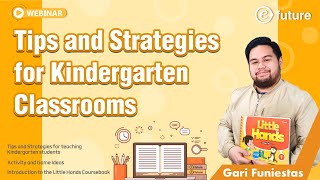 69 minTips and strategies for kindergarten classroomsGari Funiestas (e-future) · Ages 3–6The whole-child approach in practice: classroom routines and instructions, group work, timers and games that review vocabulary, with examples from the Little Hands course.Watch on YouTube →
Grammar
Structures students can actually use when they talk.
 73 minTips for teaching grammar to young learnersSoo Kim (e-future) · PrimaryFour tips: focus on meaning, build in interaction, make it fun and recycle structures in new contexts. Each tip comes with sample classroom activities.Watch on YouTube →
 92 minTeaching grammar for communication, not just correctionHannah Ruppert (e-future) · PrimaryHow to turn a grammar drill into real conversation with information gaps, personalisation, stories and role play, and when to correct errors so students stay willing to speak.Watch on YouTube →
Writing
From first sentences to short texts students write on their own.
 65 minTeaching reading and writing to learners aged 7–12Ken Beatty · Ages 7–12How to motivate children to read and write, how to connect the two skills and how to use them to develop imagination and critical thinking.Watch on YouTube →
 62 minTeaching writing in six stepsKevin (e-future) · Grades 2–6Writing as a process: warm-up, vocabulary work, grammar practice, writing and brain writing. A lesson structure that takes students from single words to a text of their own.Watch on YouTube →
Assessment
Checking progress fairly, in a way that supports learning.
 68 minExploring language testing and assessmentJohn Read · Primary and teensHow testing differs from assessment, what makes an assessment good (age-appropriate, practical, reliable and supportive of learning) and how to assess speaking.Watch on YouTube →
 49 minWriting assessment for the fearful teacherJoseph Hills (e-future) · PrimaryFormative and summative assessment of writing, and how to build a rubric that measures the actual goal of the lesson.Watch on YouTube →
Digital tools and AI
Prepare materials faster and keep more time for your students.
 63 minUsing AI and ChatGPT in everyday teachingTodd Beuckens · All stagesHow to use AI to create quizzes, gap-fill exercises, texts, explanations and lesson plans, what stays the teacher’s job and which legal points to keep in mind.Watch on YouTube →
 44 minTeaching vocabulary with AI and free online toolsTodd Beuckens · All stagesA step-by-step walkthrough: an interactive worksheet, a printable worksheet with audio, a grammar slideshow with sound and exercises built from a text found online.Watch on YouTube →
Projects and inquiry-based learning
Questions, images and projects that give students a reason to use English.
 47 minThe who, what, when, where, why and how of inquiry learningJoseph Hills (e-future) · PrimaryHow to open a lesson with a question and an image, give students choices, move questions from comprehension to inference and run small projects with children.Watch on YouTube →
 89 minAdaptable project-based learning: planning projects that workJoseph Hills (e-future) · Upper primary and teensHow to spread a project across several lessons, from dialogue and practice through a model speech to student presentations. Examples come from the English Wave course.Watch on YouTube →
Who the Smart Teaching Academy is for
- English teachers in kindergartens and primary schools.
- Teachers of teenagers who want to develop reading, speaking and writing.
- Academic coordinators and heads of English who plan their team’s work.
- School principals and language school owners who choose materials and programmes.
Let’s talk about your class
Tell us your learners’ ages, their current level and the materials you use now. We will suggest a series, a starting level and the components you need.
Teaching advice and choosing books: +48 570 335 588